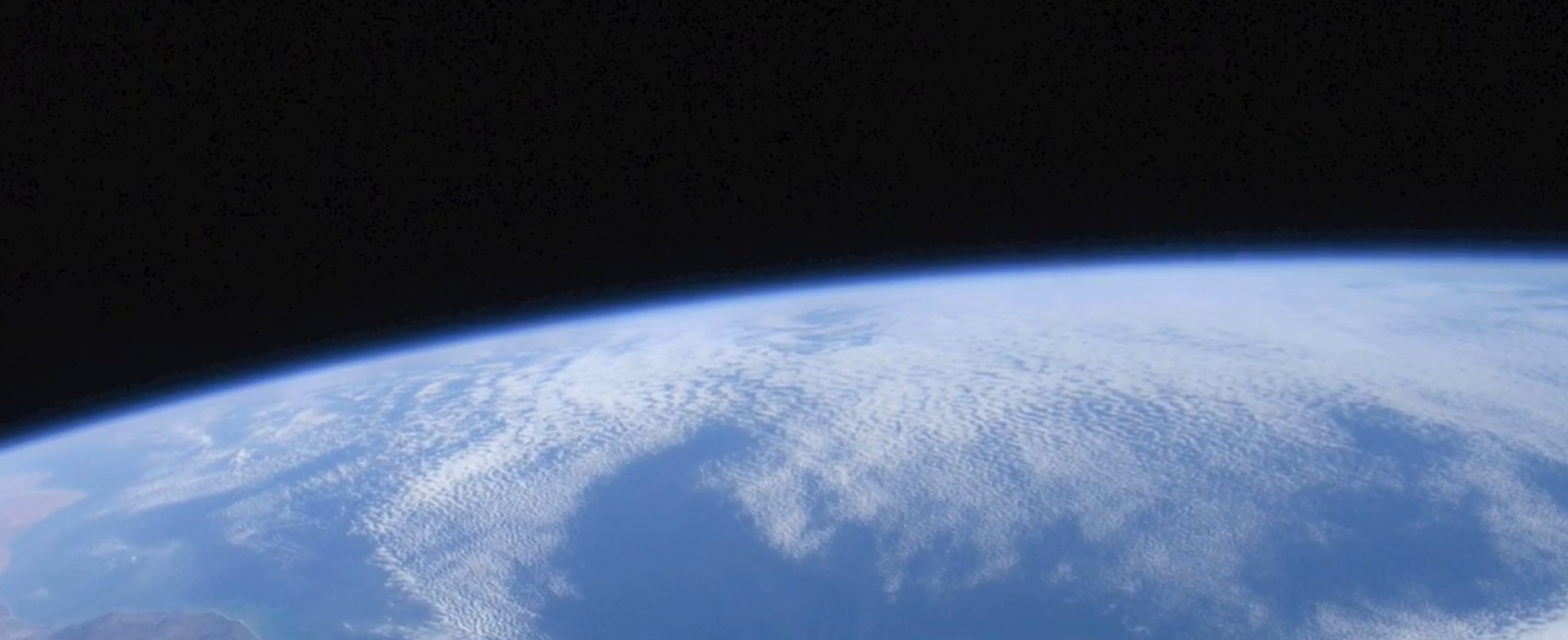
A formal certification platform for embedded control algorithms and critical AI systems. GNC controllers, embedded AI models, FPGAs, DSPs, microcontrollers. Any discrete linear system certified with formal guarantees within the certified domain and documented assumptions. Not simulation. Not statistics. Mathematically traceable certification in under one second.
Section 6.4.3.1.3.6 of the handbook does address closed-loop robustness, and recommends semidefinite relaxation and semidefinite programming for it. In that same section ESA warns that the approach is ongoing research, that verification becomes difficult as soon as the model is non-trivial, that it may require more computational power than training the model, and that it may not be practical for large models. Those methods target feedforward networks. The handbook covers neither state-space models nor switching between operational regimes. STARS gives the same class of guarantee in closed form, one SVD, in microseconds.
Before deploying a Mamba or state-space model on board, one inequality decides whether its convergence is certified. If the step parameters learned by the model satisfy it, the model is guaranteed to converge. No further analysis required.
Component D#16. Guarantees |λᵢ| ≤ κ in the worst case, the slowest component of the base matrix. The bound is conservative for Mamba, whose transition matrix is input-dependent through Δ(t). Validated on 802 independent instances.
Reference: ECSS-E-HB-40-02A, Machine Learning Qualification Handbook, ESA/ECSS, 15 November 2024. Quoted section numbers are from that edition. STARS SDK is an independent product and is not endorsed by ESA or ECSS.
No simulation. No weeks of manual analysis. Submit your system matrix and receive a formally guaranteed PDF certificate in under one second. Your data never persists: encrypted in transit, processed in memory, deleted after certification.
Upload the state-transition matrix of your algorithm: GNC controller, Kalman filter, SSM model, PD attitude control. Just numbers. No mission data, no chip architecture, no IP exposed.
Data encrypted with TLS in transit. Processed in server memory only. Automatically deleted after certification. Zero data retention. Your matrix is mathematically anonymous, pure numbers with no identifiable mission context.
STARS verifies convergence across all subsystems using the unified contraction parameter. The result is a formal mathematical proof, not a statistical estimate. If the system passes, convergence is guaranteed within the assumptions documented in the certification report.
A PDF with unique SHA-256 ID, UTC timestamp, contraction parameter, ISS error bounds, convergence steps, CERTIFIED / REJECTED verdict. Designed to slot in as design evidence in ECSS, IEC 61508, ISO 26262 and DO-178C dossiers.
Each module is backed by mathematical results verified against an active search for counterexamples, and validated on real ESA telemetry, NASA MSL data and live TLEs from three operational satellites.
STARS certifies the embedded control algorithm, not the silicon. If a chip implements a discrete linear controller, Kalman filter, SSM model, or PD attitude control, STARS provides algebraic certification in under one second. Compatible with the entire space-grade hardware ecosystem.
Quad-core rad-hard SoC. ESA European Preferred Parts List. Used in ESA JUICE, Proba-3. Implements GNC controllers certifiable with D#15 and D#7.
Dual-core rad-hard LEON3FT on ESA EPPL. Used in Sentinel-3, OPS-SAT, CHEOPS. Standard processor for ESA small/medium missions.
LEON3FT with real-time accelerators. Used in ESA CubeSats and small missions. D#7 certifies PD attitude control algorithms running on GR716B.
8-core NOEL-V RISC-V + LEON4FT + embedded FPGA. First rad-hard AI chip for space inference. D#16 certifies SSM models running on GR801 for on-orbit AI.
150K LE rad-hard Flash FPGA. SEU-immune. Proven flight heritage. Implements GNC controllers at 100Hz. D#15 and D#7 certify all discrete control algorithms.
Antifuse rad-hard FPGA, 300 krad. Flight heritage on MRO, Cassini. GNC algorithms with no formal algebraic certification today, and STARS fills that gap.
ARM Cortex-M7 rad-hard, 150 krad, 50MHz. SpaceWire + MIL-STD-1553 + CAN-FD. Used in European NewSpace. D#7 certifies attitude PD controllers on SAMRH707.
NASA next-gen SoC. 100x performance over RAD750. Designed for autonomous spacecraft decision-making. Testing at Goddard 2026. GNC algorithms are prime candidates for STARS.
Most proven space processor in history: Mars rovers, New Horizons, James Webb, Juno. Thousands of active missions with GNC algorithms that have no formal certification today.
Versal AI Core space-grade. ARM + AI Engine + FPGA fabric. 4 TOPS for on-orbit inference. D#16 certifies SSM models running on AI Engine for Earth observation and navigation.
Kintex UltraScale space-qualified. 726K logic cells. Used in commercial satellites from Airbus, Thales, and NewSpace startups. Implements SSM and control algorithms without formal certification.
ARM Cortex-M4 rad-hard, 300 krad. Used in commercial CubeSats and small LEO satellites. D#7 provides certified PD gains for attitude control on VA10820.
ARM Cortex-M4 high-performance. QML certified by DLA, the highest space-grade standard. QPL part 5962-R24203. D#7 certifies PD attitude control algorithms on VA41630.
Rad-hard SBC based on NASA H-Core. Used for command, power, and data handling in micro and nanosatellites. Orbital estimators running on Proton200k are certifiable with D#6.
Triple-core rad-hard DSP for LEO and GEO. High-performance signal processing for satellites. D#15 certifies discrete control loops and D#6 certifies orbital navigation algorithms.
STARS certifies the embedded control algorithm, not the physical silicon. Hardware failures (radiation SEUs, thermal degradation, manufacturing defects) remain the domain of FMEA, radiation testing, and hardware qualification. STARS provides the formal algebraic certification layer that sits between the chip and the mission.
The algebraic guarantee is domain-agnostic. The same formal proof that certifies a satellite FPGA certifies an industrial robot controller, an automotive ECU, or a medical device SSM model.
FPGAs, processors and AI chips in LEO, GEO and deep space. Relevant to ECSS-E-ST-60-10C (control performance) and to ECSS-E-HB-40-02A (ML qualification). Weeks of manual analysis reduced to seconds. Validation simulations across 74 modelled platforms.
Flight control chips for UAVs. D#7 certifies the contraction and settling time of a PD attitude loop on any flight controller, which is the kind of design evidence an EASA operational authorisation dossier draws on. The authorisation itself is issued by the authority.
Closed-loop controllers on industrial robot MCUs and FPGAs. D#15 produces the formal stability evidence that an IEC 61508 safety case requires for a discrete control loop, in under 1 second instead of weeks of manual Lyapunov analysis. Certification against the standard remains with the notified body.
Embedded SSM models on medical chips for continuous monitoring. D#16 provides a formal convergence bound that can be cited as design evidence in the technical documentation of a device under MDR. It does not replace conformity assessment, clinical evaluation or IEC 62304 lifecycle compliance.
In-house validation campaign run by Space117, using public parameters from ESA eoPortal, University of Colorado Boulder, Cal Poly CubeSat Lab, NASA SmallSat SOA and manufacturer datasheets. 50 algorithm certifications across 15 chips from 6 manufacturers, using 4 of the 6 modules. Every case certifies, because every case sits inside the nominal published range of its chip. A design outside that range is rejected by the same rule, and the free trial is there to try exactly that. These are validation runs on published parameters, not certifications of deployed flight systems.
| Chip | Manufacturer | Algorithm | Module | Alpha | Verdict |
|---|---|---|---|---|---|
| Gaisler GR740 | Cobham Gaisler / ESA | Attitude PD Control | D#7 | 0.4524 | ✦ CERT |
| SSM / Mamba (dim=3) | D#16 | 0.3759 | ✦ CERT | ||
| GNC System Matrix | D#15 | 0.4848 | ✦ CERT | ||
| GPS Eclipse Navigation | D#6 | 0.1378 | ✦ CERT | ||
| Gaisler GR712RC | Cobham Gaisler / ESA | Attitude PD Control | D#7 | 0.4224 | ✦ CERT |
| SSM / Mamba (dim=3) | D#16 | 0.3439 | ✦ CERT | ||
| GNC System Matrix | D#15 | 0.4565 | ✦ CERT | ||
| GPS Eclipse Navigation | D#6 | 0.1378 | ✦ CERT | ||
| Gaisler GR716B | Cobham Gaisler | Attitude PD Control | D#7 | 0.4816 | ✦ CERT |
| SSM / Mamba (dim=3) | D#16 | 0.4071 | ✦ CERT | ||
| GNC System Matrix | D#15 | 0.5122 | ✦ CERT | ||
| Gaisler GR801 GRAIN | Cobham Gaisler | Attitude PD Control | D#7 | 0.5100 | ✦ CERT |
| SSM / Mamba (dim=16) | D#16 | 0.3111 | ✦ CERT | ||
| GNC System Matrix | D#15 | 0.5390 | ✦ CERT | ||
| Microchip RTG4 | Microchip Technology | Attitude PD Control | D#7 | 0.5376 | ✦ CERT |
| SSM / Mamba (dim=3) | D#16 | 0.3600 | ✦ CERT | ||
| GNC System Matrix | D#15 | 0.5649 | ✦ CERT | ||
| Microchip RTAX2000S | Microchip Technology | Attitude PD Control | D#7 | 0.4375 | ✦ CERT |
| SSM / Mamba (dim=3) | D#16 | 0.3600 | ✦ CERT | ||
| GNC System Matrix | D#15 | 0.4707 | ✦ CERT | ||
| Microchip SAMRH707 | Microchip Technology | Attitude PD Control | D#7 | 0.4671 | ✦ CERT |
| SSM / Mamba (dim=3) | D#16 | 0.3916 | ✦ CERT | ||
| GNC System Matrix | D#15 | 0.4986 | ✦ CERT | ||
| Microchip HPSC (NASA) | Microchip / NASA JPL | Attitude PD Control | D#7 | 0.4816 | ✦ CERT |
| SSM / Mamba (dim=12) | D#16 | 0.3276 | ✦ CERT | ||
| GNC System Matrix | D#15 | 0.5122 | ✦ CERT | ||
| GPS Eclipse Navigation | D#6 | 0.1378 | ✦ CERT | ||
| BAE Systems RAD750 | BAE Systems | Attitude PD Control | D#7 | 0.4375 | ✦ CERT |
| SSM / Mamba (dim=3) | D#16 | 0.3600 | ✦ CERT | ||
| GNC System Matrix | D#15 | 0.4707 | ✦ CERT | ||
| AMD Versal XQRVE2302 | AMD / Xilinx | Attitude PD Control | D#7 | 0.4959 | ✦ CERT |
| SSM / Mamba (dim=32) | D#16 | 0.2604 | ✦ CERT | ||
| GNC System Matrix | D#15 | 0.5257 | ✦ CERT | ||
| AMD Kintex XQRKU060 | AMD / Xilinx | Attitude PD Control | D#7 | 0.5239 | ✦ CERT |
| SSM / Mamba (dim=3) | D#16 | 0.3916 | ✦ CERT | ||
| GNC System Matrix | D#15 | 0.5520 | ✦ CERT | ||
| VORAGO VA10820 | VORAGO Technologies | Attitude PD Control | D#7 | 0.4671 | ✦ CERT |
| SSM / Mamba (dim=3) | D#16 | 0.4224 | ✦ CERT | ||
| GNC System Matrix | D#15 | 0.4986 | ✦ CERT | ||
| VORAGO VA41630 QML | VORAGO Technologies | Attitude PD Control | D#7 | 0.4959 | ✦ CERT |
| SSM / Mamba (dim=3) | D#16 | 0.4071 | ✦ CERT | ||
| GNC System Matrix | D#15 | 0.5257 | ✦ CERT | ||
| Space Micro Proton200k | Space Micro | Attitude PD Control | D#7 | 0.5100 | ✦ CERT |
| SSM / Mamba (dim=3) | D#16 | 0.4375 | ✦ CERT | ||
| GNC System Matrix | D#15 | 0.5390 | ✦ CERT | ||
| GPS Eclipse Navigation | D#6 | 0.1378 | ✦ CERT | ||
| Space Micro Proton400k | Space Micro | Attitude PD Control | D#7 | 0.4959 | ✦ CERT |
| SSM / Mamba (dim=3) | D#16 | 0.4224 | ✦ CERT | ||
| GNC System Matrix | D#15 | 0.5257 | ✦ CERT | ||
| GPS Eclipse Navigation | D#6 | 0.1378 | ✦ CERT |
All chip parameters come from public sources: ESA eoPortal, peer-reviewed papers (ResearchGate), university theses (University of Colorado Boulder, Cal Poly), NASA technical reports, and manufacturer datasheets. Inertia values estimated from published mass and geometry where not explicitly stated. These are validation simulations, not certifications of actual deployed systems, which would require the engineer to provide their exact system matrices.
3 free certifications. No credit card. No time limit. Full pipeline: GNC, SSM, NAV, ATT.